Mahogany or Solid Spruce Top? Orchestra or Dreadnought? How does guitar top wood and body shape affect the tone of your acoustic guitar? Let’s explore, while our acoustic maestro Bene plays a shootout of these two top woods and body shapes so you can hear the difference for yourself. Four solid top guitars: two orchestra, two dreadnought, one mahogany top and one spruce top each. Guns in your holsters? Let the shootout begin.
You are currently viewing a placeholder content from YouTube. To access the actual content, click the button below. Please note that doing so will share data with third-party providers.
Guitar tops – or soundboards – can be either solid top or laminate. Laminate tops glue a thin wood over layers of cheaper wood which is more affordable, but the extra glued layers dampen vibration, so laminate tops can sound flatter than solid tops. A solid top, on the other hand, is one uncut piece of wood, free to resonate with a loud, dynamic sound that keeps improving as the wood ages. Everything else, the back, the sides, the bracing; are largely supporters of the guitar top’s main job: to turn the physical vibration of playing into audible sound. Two otherwise identical guitars can sound very different depending on their top woods.
Sitka Spruce
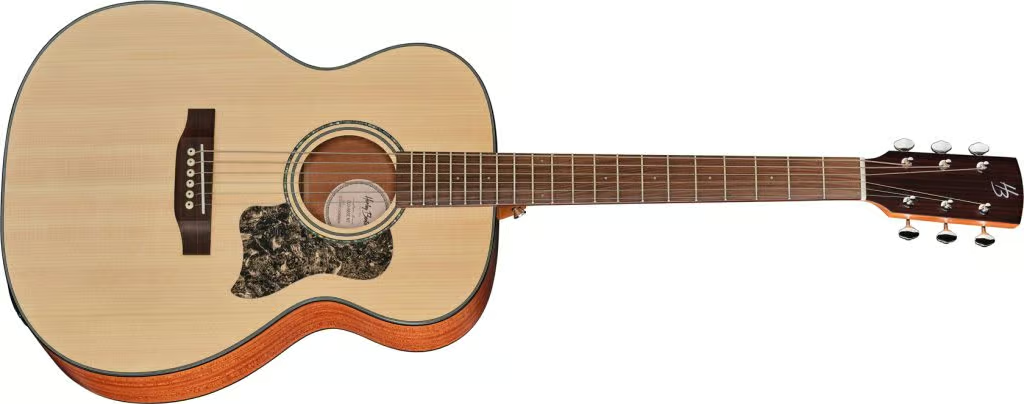
Sitka spruce is by far the most common solid top wood. A classic look, it’s what you picture when you imagine an acoustic guitar top. It’s strong, consistent, and has a wide dynamic range: it can sing under a light fingerpicking pattern and still hold up well under an aggressive strum. Its versatility is what makes it such a popular choice. In our shootout, Bene demonstrates by picking and strumming on sitka spruce topped orchestra and dreadnought shaped guitars. We can hear the spruce tops lean more toward clarity than warmth. Spruce loves dynamic playing, making it a go-to for strummers and flatpickers.
CLO-65SE NT – Spruce top, orchestra shape
Mahogany
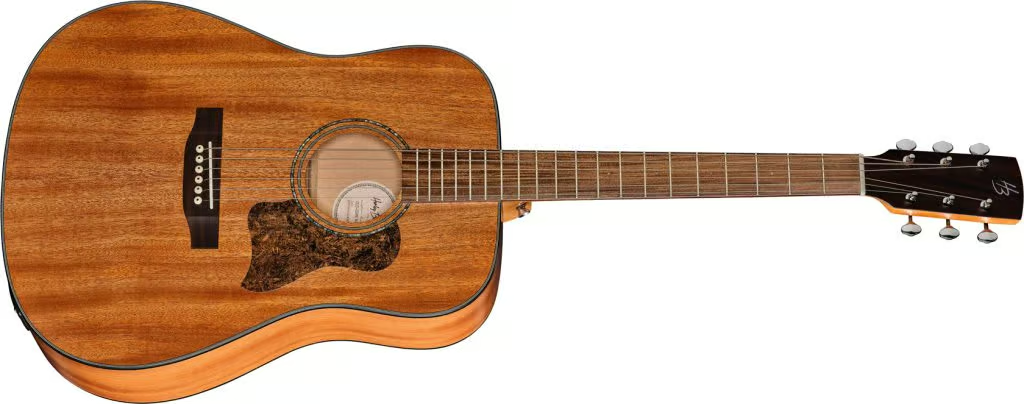
Mahogany, by contrast, is a hardwood with a darker tone. Where spruce is bright and articulate, mahogany dances around the midrange. A mahogany tone is more compressed, with fewer sparkling overtones and more punch. Notes come out a little “dry,” with less of the shimmer and sustain you get from spruce. Direct, woody, and upfront, it’s a good choice if you want more immediacy and warmth. Mahogany suits players who want an instrument that sounds settled and focused: blues, folk, and recording contexts where you don’t want boomy low end competing with vocals or bass.
CLD-65ME NT – Mahogany top, dreadnought shape
Other Top Woods
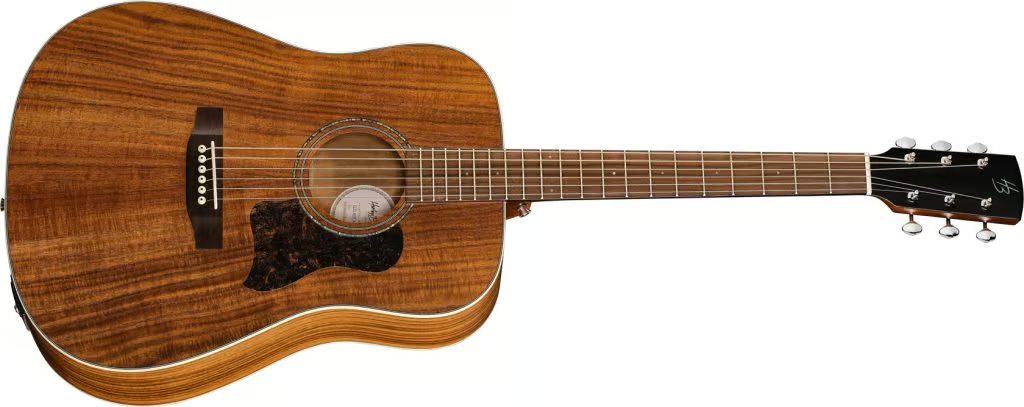
Other top woods are of course possible and each will give your acoustic guitar a different character. Our CLD-65AE uses acacia, which tends to sound bright and slightly compressed. Acacia has a clear midrange mixed with some up top sparkle, perhaps a middle ground between the poles of Sitka spruce and mahogany. No solid top is objectively better; they’re suited to different jobs, and which one you choose is a matter of taste and function.
CLD-65AE NT – Acacia top, dreadnought shape
Body Shape
Top wood may set the tone, but body shape determines the delivery. The same top wood can sound noticeably different depending on which body shape it’s superimposed onto. Maestro Bene takes the examples of a classic dreadnought versus an orchestra shaped acoustic. We hear clearly how the mahogany orchestra sounds dry and forward, while the spruce orchestra sounds sweet as sweet can be; whereas both the dreadnought shapes sound fuller and more powerful – the spruce top brighter, the mahogany more midrange focused. Pair a bright Sitka top with a dreadnought for maximal projection: a strummer’s guitar. Pair the same Sitka top with an orchestra body and the volume and tone become more balanced. Swap in a mahogany top on either shape and things get darker and more direct. Wood and shape aren’t independent from one another, they form part of a system where neither tells a full tale alone.
Conclusion
There’s no single “best” top wood, only the right wood for how you play. Sitka spruce remains the safe bet for good reason: it’s a solid all-rounder. Mahogany is a great choice when you want more punch. Acacia and other topwoods each carve out their own niche for when you’re chasing something more specific. Pair your preferred top wood with the body shape that serves your playing style, and you’ll get an instrument that will work with you rather than against you. We offer all sorts of variations – solid top, all-solid – meaning there’s a guitar to suit every budget. And, of course, if you’ve ever wondered how bridge pins affect sound quality, we’ve got you covered on that front, too.
You need to load content from reCAPTCHA to submit the form. Please note that doing so will share data with third-party providers.
You are currently viewing a placeholder content from Facebook. To access the actual content, click the button below. Please note that doing so will share data with third-party providers.
You are currently viewing a placeholder content from Instagram. To access the actual content, click the button below. Please note that doing so will share data with third-party providers.
You are currently viewing a placeholder content from Instagram. To access the actual content, click the button below. Please note that doing so will share data with third-party providers.