Guitars
Shapes
Series
Basses
Shapes
Series
Acoustic Guitars
Guitar shapes
Guitar series
Acoustic Guitars
Acoustic Basses
Ukuleles
Series
Highlights
Amps
Highlights
Effects
Types
Highlights
Search on Harley Benton
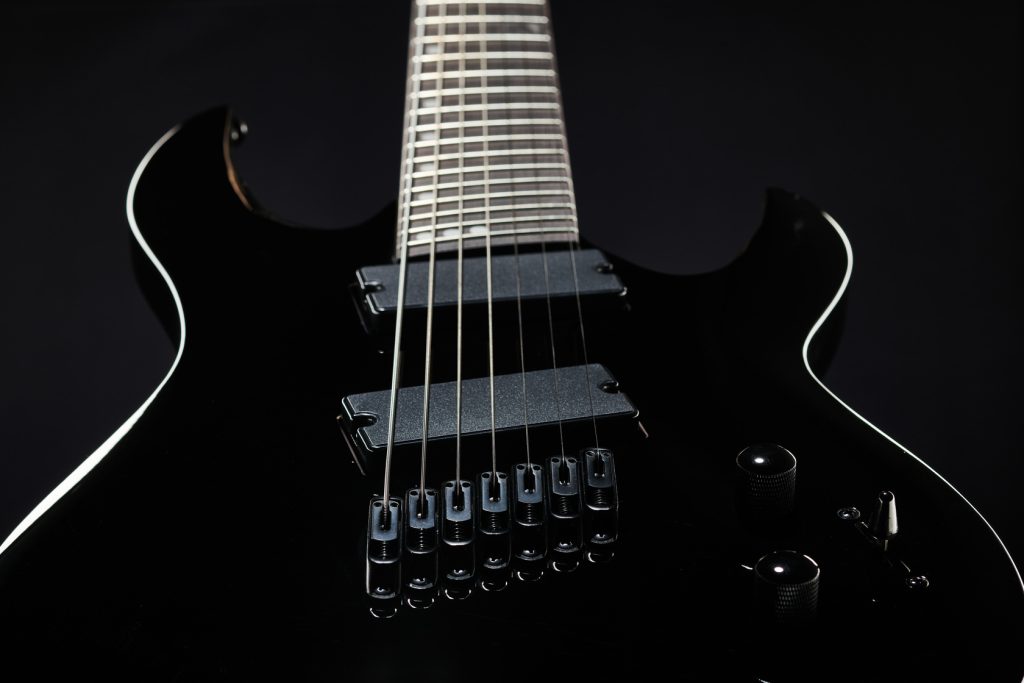
The scale-length of a guitar refers to the distance between the nut and the bridge where the string vibrates freely. On a standard guitar, the strings share the same scale-length (usually between 24.75” and 25.5”). But on a multiscale instrument each string has its own designated length.
The lower, or thicker, strings tend to be longer in length than their thinner counterparts. In that way, a multiscale guitar is a bit like a piano, where the lower notes have longer strings and get shorter as they go up to the higher notes.
Due to these differences in scale-lengths, the frets are laid out in a ‘fanned’ fashion which looks more pronounced on 7- or 8-string, or more, multiscale guitars.
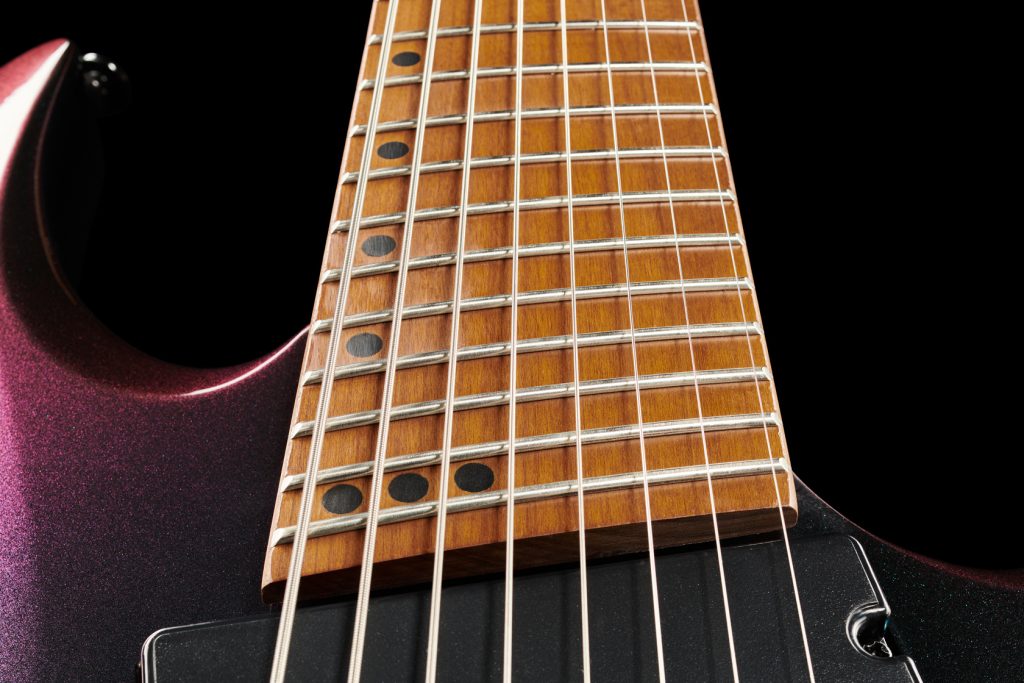
Some players find that multiscale guitars feel more comfortable to play, noting that their fingers tend to fall naturally on the frets. And since the all the strings have consistent tension, pressing down on the notes, as well as bends and vibrato, feels consistent across the different strings.
A major advantage of a balanced string tension is that it helps with down-tuning, often used in metal and other hard rock genres. On a standard scale guitar, tuning down the lower strings tends to make them feel loose and sound “flubby”, whereas on a multiscale guitar, where the bass string have a longer scale, the added tension allows for tighter detuned notes, offering a cleaner definition and note clarity.
This makes multiscale guitars especially popular among metal players, who regularly down-tune their strings. But the benefits apply to players of any style who are looking for balanced dynamics across the range.
Extended range guitars, those with 7, 8, or even 9 strings, especially benefit from this balanced tension. The longer bass strings keep low notes clear and articulate, while the shorter treble strings remain expressive and easy to bend. For players who explore drop-tunings or complex chord voicings, the difference is both audible and tactile.
All of these applications and appointments are also true for multiscale basses. Often coming with 35-37 inch or 33-35 inch scale-lengths, bassists choose multiscale basses for much the same reasons that guitarists do.